
"tropical coffee"
16000 article(s) found

Intense and inviting Guatemala coffee estate region Flavor Taste Characteristics Fine coffee beans Introduction
Guatemala is located in the tropics. The northern and eastern coastal plain areas belong to tropical rain forest climate, and the southern mountainous areas belong to subtropical climate. There are two dry and wet seasons in a year. The wet season is from May to October, and the dry season is from November to April of the following year. Guatemala has a tropical climate on the narrow, fertile plains of the Pacific Ocean. The central plateau is also the cultural center of Guatemala, where year-round temperatures range from 1300 to 1800 meters

Cultivation conditions of Coffee
Coffee is mainly grown in tropical and subtropical areas, which is called coffee belt (Coffee Belt). In general, in Europe and the United States, coffee produced at high altitude is more expensive and of high quality than those at lower altitude. There is a noun called coffee belt. Coffee is produced in more than 60 countries around the world, most of which are sandwiched in the Tropic of Cancer (23 degrees south and 27 minutes north).

General knowledge of boutique coffee beans map of global coffee producing areas
Coffee trees grow in tropical or subtropical agricultural gardens centered around the equator and called coffee belts. Most of the coffee production is between the Tropic of Cancer, 25 degrees north of the tropical or subtropical equator and 30 degrees south of the equator. An area with an annual average temperature of 16-25 degrees Celsius, no Frosts Descent and rainfall of 1600-2000 mm.
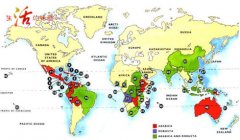
Coffee training knowledge: global Coffee producing area Map
Coffee trees grow in tropical or subtropical agricultural gardens centered around the equator and called coffee belts. Most of the coffee production is between the Tropic of Cancer, 25 degrees north of the tropical or subtropical equator and 30 degrees south of the equator. An area with an annual average temperature of 16-25 degrees Celsius, no Frosts Descent and rainfall of 1600-2000 mm.
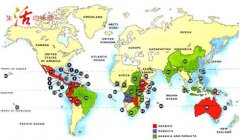
Map of global coffee producing area for the production of boutique coffee beans
Coffee trees grow in tropical or subtropical agricultural gardens centered around the equator and called coffee belts. Most of the coffee production is between the Tropic of Cancer, 25 degrees north of the tropical or subtropical equator and 30 degrees south of the equator. An area with an annual average temperature of 16-25 degrees Celsius, no Frosts Descent and rainfall of 1600-2000 mm.
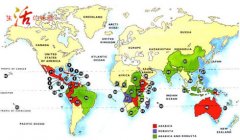
Analysis of global coffee producing area map analysis of coffee bean production area
Coffee trees grow in tropical or subtropical agricultural gardens centered around the equator and called coffee belts. Most of the coffee production is between the Tropic of Cancer, 25 degrees north of the tropical or subtropical equator and 30 degrees south of the equator. An area with an annual average temperature of 16-25 degrees Celsius, no Frosts Descent and rainfall of 1600-2000 mm.
Raw beans of Jamaican coffee
The unique flavor of Blue Mountain Coffee is related to its geographical location and climatic conditions. Generally speaking, south of the Tropic of Cancer and north of the Tropic of Cancer, this area is suitable for growing coffee, called the coffee belt. Jamaica is just south of the Tropic of Cancer. The blue mountain is steep, the air is fresh, there is no pollution, it rains all the year round, and there is a great temperature difference between day and night, which has a unique and fertile new volcanic soil.

Basic knowledge of Coffee training Global Coffee producing area Map
Coffee trees grow in tropical or subtropical agricultural gardens centered around the equator and called coffee belts. Most of the coffee production is between the Tropic of Cancer, 25 degrees north of the tropical or subtropical equator and 30 degrees south of the equator. An area with an annual average temperature of 16-25 degrees Celsius, no Frosts Descent and rainfall of 1600-2000 mm.
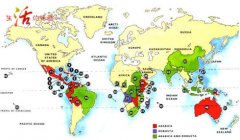
Global Coffee producing countries take a large inventory of where coffee is produced? Each
Coffee trees grow in tropical or subtropical agricultural gardens centered around the equator and called coffee belts. Most of the coffee production is between the Tropic of Cancer, 25 degrees north of the tropical or subtropical equator and 30 degrees south of the equator. An area with an annual average temperature of 16-25 degrees Celsius, no Frosts Descent and rainfall of 1600-2000 mm.

Honduras Coffee Tropical Rainforest Certified Coffee Garden
Professional baristas Please follow the Coffee Workshop (Wechat official account cafe_style) there are 280000 hectares of coffee plantations in Honduras, mainly small coffee businesses, most of which are less than 3.5ha, accounting for 60% of Hongguo's production. In the coffee garden, men and women collect coffee beans by hand, then handle them carefully and make them.

Introduction to Antigua Coffee producing area of Guatemala Fine Coffee with Tropical Rain Forest
Antigua is a famous producer of coffee. Antigua coffee is produced in Hacienda Carmona, where the best quality coffee is EL Pulcal, which is not only of good quality, but also has a stronger flavor, richer taste and stronger tobacco flavor than other Guatemalan coffee. The area near Antigua is hit by a volcano every 30 years or so.

A brief introduction to the development of the planting base map of Bourbon Rivida beans under regional conditions of Hillado coffee beans in Brazil
Brazil makes full use of the tropical geographical environment and attaches importance to the production and sale of coffee, so that the output, export volume and per capita consumption of coffee have been ranked first in the world for many years, and have been praised as the coffee kingdom. But the hometown of coffee is not in Brazil, but in Ethiopia in Africa.

Papua New Guinea coffee beans with tropical flower and fruit aromas of coffee
The top coffee beans in Papua New Guinea are as beautiful and precious as the country's national bird of paradise. As coffee in the country is widely grown in the highlands of 1300 to 1800 meters above sea level, coffee beans are plump and varied in taste, with pleasant acidity and fruit-like sweetness. In Papua New Guinea, about 75% of coffee products come from small local farmers.
El Salvador coffee bean producing area introduces El Salvador bourbon sunburn taste pleasant tropical fruit aroma
Professional coffee knowledge exchange more coffee bean information please follow the coffee workshop (Wechat official account cafe_style) front street-El Salvador sunburn bourbon the Republic of El Salvador is located in the north of Central America, is the most populous country in Central America. The country is bordered by Honduras to the north, the Pacific Ocean to the south and Guatemala to the northwest. The national economy is dominated by agriculture, and the main crops are coffee and
Hawaiian ice cream coffee with tropical island style
The enthusiasm of Hawaiian coffee must make you drink it and don't want to put down the cup. Close your eyes and drink a cup of Hawaiian ice cream coffee, as if you can feel the amorous feelings of Hawaii, as if you immediately flew across the ocean to the beautiful island of Hawaii. Would you like to know how to make Hawaiian ice cream coffee with tropical island style? editor, let's take you to enjoy the leisure atmosphere. Hawaii is located in the United States.

Rosa coffee boutique coffee bean flavor unique flower aroma, tropical fruit, strong sweetness
In 1931, he obscure exported Kenya from Geisha Mountain Mountain in southwestern Ethiopia to Tanzania and Costa Rica, then transplanted to Panama in the 1960s, and then went through nearly half a century before he became a blockbuster, defeating the victorious armies such as Bourbon, Kaddura, Kaduai, Tibica and so on, winning 2005 in one breath.

Introduction of Brazilian Yellow bourbon Coffee Bean Flavor description Grinding scale Variety Taste Manor
Brazil yellow bourbon coffee bean flavor description grinding scale variety taste manor introduction Brazil is in the tropics, the north is a tropical rain forest climate, hot and humid all the year round, suitable for the growth of tropical crops, coffee trees are sunny crops, sufficient sunlight is the condition for its growth. Historically, Brazil has been a Portuguese colony for a long time, and it has been ordered for a long time to meet the needs of Western Europe.

Description of Brazilian Coffee Flavor with extremely smooth entrance introduction of varieties with the characteristics of grinding degree
In terms of natural conditions, Brazil is in the tropics, with a tropical rain forest climate in the north, hot and humid all the year round, suitable for tropical crops, coffee trees are sunny crops, and sufficient sunlight is the condition for their growth. Historically, Brazil has been a Portuguese colony for a long time. In order to meet the needs of Western Europe, Brazilian coffee has been growing single crops for a long time and developing tropical plantations.
Brazilian coffee beans
Brazilian coffee beans refer to all coffee beans grown in Brazil. Except for Sanduo, Brazilian beans are mostly "cheap and good" coffee. Can be used for mass production of comprehensive coffee beans, most of which are re-roasted. The main raw material of instant coffee is also Brazilian coffee beans.

Raw beans of Jamaica Blue Mountain Mavis bank Grade 1
The unique flavor of Blue Mountain Coffee is related to its geographical location and climatic conditions. Generally speaking, south of the Tropic of Cancer and north of the Tropic of Cancer, this area is suitable for growing coffee, called the coffee belt. Jamaica is just south of the Tropic of Cancer. The blue mountain is steep, the air is fresh, there is no pollution, it rains all the year round, and there is a great temperature difference between day and night, which has a unique and fertile new volcanic soil.